Be yourself; Everyone else is already taken.
— Oscar Wilde.
This is the first post on my new blog. I’m just getting this new blog going, so stay tuned for more. Subscribe below to get notified when I post new updates.
Be yourself; Everyone else is already taken.
— Oscar Wilde.
This is the first post on my new blog. I’m just getting this new blog going, so stay tuned for more. Subscribe below to get notified when I post new updates.
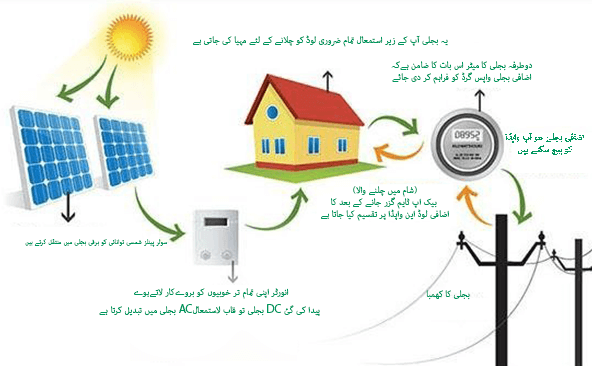
“Net metering” is the act of running a meter for vitality use backward when a client takes care of vitality into the framework as opposed to coaxing it out, and charging the client for the “net” measure of vitality drawn. It’s utilized in home vitality frameworks that are “on the matrix,” which implies that the house is as yet associated with the vitality utility’s framework and draws upon business vitality creation for accommodation. Read details of Net metering in pakistan
Net-metering is a training received by Network Utilities Worldwide that is widely basic in which the proprietors for the units of the circulated age counterbalance the utilization of power with the nearby age from the matrix. There has been a huge increment in the pace of prosumers with the age of Solar Photovoltaic vitality that is joined with the consequence of net-metering. Thus, there has been a decrease in the pay for the utilities of the system that happen at a quick pace.
There are two kinds of net metering arrangements that we offer under housetop sun based pv:
ON GRID System/Grid Tied framework; which is a future evidence framework once there is no heap shedding. The Grid tied framework is combined with the matrix and feeds inordinate force in the lattice which thus gets credited in the purchaser bill. The main disadvantage of this framework is that it requires lattice availability to work for example it doesn’t work during load shedding. An Off-Grid UPS can be utilized to control basic burdens during load shedding. It is foreseen that the heap shedding will end totally in 2 years, a framework with battery reinforcement may bode well today however battery expenses and its substitution following 3 years take the ROI time frame for an additional 2 years.
Half and half System: It is a Grid Tied with Backup framework with both the usefulness of an off-matrix nearby planetary group and an on-lattice nearby planetary group. Tragically, the market envisions the off-framework close planetary system with UPS usefulness as crossover since they imagine WAPDA as an optional info source which isn’t right. A genuine crossover framework is one which contains more than one sustainable power source asset for determination or added substance sharing.
One of the most energizing developments by the world was the sun powered boards for catching vitality. For as far back as not many years, there has been a quick lessening in the cost of sun powered boards. That is the motivation behind why everybody got them. People overall acknowledged how valuable the sun oriented boards had demonstrated to be for their net metering. That is the reason they chose to buy it and acknowledged how astounding a speculation it would make. The expense of Solar Panels to be introduced in a solitary home relies on its power.Because the sun oriented boards would now be able to be purchased at the most sensible cost, practically all the individuals approach it. They are utilizing it towards their fullest limit, by giving different advantages towards net metering.
The extraordinary preferred position of net metering is comfort. A home vitality framework with net metering doesn’t need to create 100% of the force that the home needs. Additionally, with net metering it’s pointless to have a significant part of the helper hardware that is utilized with an off-lattice framework. The property holder needn’t bother with capacity batteries, for instance. The vitality being utilized by apparatuses is drawn from the business framework similarly as though no home vitality framework existed. Since net metering is an instrument for the charging that may happen electrically, with the assistance of this, shoppers are permitted to produce power of their own whenever of the day, month, season, or year.
Rather than sitting tight for it to be produced, It has demonstrated to be incredibly useful for the wellsprings of sustainable power source, for example, sun oriented and wind and furthermore the sources that are non-dispatchable. In the climate, there is no ozone harming substance discharge when different strategies assimilate vitality. The sun furnishes us individuals with more vitality than we need. Also, utilizing that vitality, certain brands give out the web to the people of their city or state. One of the numerous reasons why individuals from everywhere Pakistan lean toward net metering is that it helps more in less vitality misfortunes. This encourages us in getting the quickest availability of the web. For web bills, yet Net metering with sun oriented vitality has demonstrated to have different generous advantages everywhere on over the world. It is additionally useful in giving openings for work to people everywhere on over the world.
The arrangement of the net metering has given financial advantages everywhere on over the world for the vitality arrangement of sunlight based, and this has made different open doors for work and occupations for the young people of Pakistan. It has made positions for circuit repairmen, producers, and installers, permitting them to work in the gracefully chain of sun oriented vitality. Today, a huge number of youthful people have been utilized because of the solid arrangements of net metering, and they have altogether permitted the market of sunlight based vitality to flourish.
Net Metering Pakistan Price versus Advantage Analysis of Solar Net Metering Application in Pakistan
Sunlight based Net Metering is the splendid charging plan with your utility that permits unit to unit change for any abundance inexhaustible power conveyed to the network. OK! Set… you have a 3-Phase electric meter and prepared for supplanting with Wapda Net Metering from neighborhood DISCO through Zorays Solar Pakistan. How to continue? Underneath, we will examine Net Metering Pakistan Price versus Advantage Analysis of Solar Net Metering Application in Pakistan.
How does net metering sway an electric buyer? All things considered, no one comprehends Net Metering in Pakistan superior to us. What’s more, why not? Net metering definition is something that a retail shop metal even a shipper won’t outline for you. The standard compensation back does exclude the vitality units collected as the fare of vitality is restricted until the endorsement of your net metering application. All things considered, the ostensible pace of bill derivation in the event of power fare to the network is set @ weighted normal of off pinnacle and pinnacle hour rate and will just happen after the batteries are quickly completely energized to keep up least reinforcement against assessed load. Subsequently, the standard compensation back time will undoubtedly increment with these sorts of nepra net metering rules. All the more thus, without batteries, the unit to unit change happens for both off pinnacle and pinnacle hour rates yet for top hour unit modification there is some foundation cost that the customer despite everything needs to hold up under.
Public Electric Power Regulatory Authority as of late introduced their Net Metering office with interchange vitality improvement board aedb endorsing certain sellers simply after these satisfied specified models. Protection is the least cost other option (net sun powered) to high service bills. In the event that everybody diminished their utilization by 20 percent, there would be 20 percent more cash remaining in your pocket. The least expensive kiloWatt is the one you don’t need to go out and buy.
Moreover, it could be similarly vocal to get your free vitality and have the option to sell the abundance back at an extremely worthwhile rate. Public Electric Power Regulatory Authority as of late introduced their “net metering” program to general society of Islamabad, Rawalpindi and Lahore. This netmetering plan credits clients for the power they produce in overabundance of the power they are expending after every three months.
Contrast this netmetering plan with taking care of a month to month utility tab and getting no degree of profitability. Net metering is a charging plan by which a net meter (Bi-directional meter) is introduced at any Grid Tied Renewable Energy framework (Solar and wind power framework) which import power when creation from nearby planetary group is not as much as request and it trades power when power creation through nearby planetary group is more than the interest and toward the finish of month the Utility organization sends the month to month bill of the net meter and this gives a sparing to purchaser who offer their overabundance power and advantage to Utility of having sun oriented power for different customers to utilize when Renewable framework trades power.
This is particularly helpful in light of the fact that a home vitality framework ordinarily doesn’t deliver its vitality at advantageous occasions. A nearby planetary group, for instance, has greatest creation limit during the light hours, yet most vitality use occurs around evening time. That is when counterfeit lighting is required. It’s additionally when individuals are typically at home. In the winter months, it’s the hour of the best vitality cost for warming the home. With an on framework utilizing net metering, the framework can “offer” vitality to the utility during the hours of high creation and low use, for a credit that can be utilized to “purchase” vitality again from the utility during the hours of low creation and high use.
Recollect power unit rate in Pakistan 2019 have swelled by over 5% than the previous year this regularly features the positive financial impact of Net Metering with sunlight based vitality. While keeping in see the network equality since the power rate in Pakistan has never stayed consistent, a net metering framework takes care of intensity from the home creation framework into the lattice, which the utility can offer to different clients. During times when the house is creating vitality (ordinarily from a sun based or wind power framework), and more vitality is being taken care of into the matrix than taken from it, the utility’s bookkeeping framework “pays” the client for this vitality as a credit that can be utilized to purchase vitality from the utility.
During times when more vitality is being drawn from the lattice than added to it, the credit is diminished to pay for the vitality expended. Toward the month’s end, if more vitality has been expended than delivered by the client, the utility charges the client for the distinction. In the event that more vitality has been created than devoured, the utility pays the client for the distinction utilizing vitality meter

ISTANBUL: Human rights advocates expressed worry after Turkey’s parliament passed a controversial bill giving the government greater control of social media.
Under the new law, social media giants such as Facebook and Twitter have to ensure they have local representatives in Turkey and to comply with court orders over the removal of certain content or face heavy fines.
The legislation targets social networks with more than a million unique visits every day and says servers with Turkish users’ data must be stored locally.
If companies refuse to comply, they will face fines and restriction of bandwidth making the platform unusable.
The bill was submitted by the ruling AKP and its nationalist partner the MHP, which have a majority in the parliament, and passed after debates beginning on Tuesday and lasting into Wednesday. Details of What is an Apple Card?
After the night-long debate, the parliament went into summer recess till October.
‘Dark era’
Human rights groups and the opposition are worried over what they call the erosion of freedom of expression in Turkey, with thousands of people subject to criminal proceedings for “insulting” President Recep Tayyip Erdogan on social media.
They argue that increased control of social media will also limit Turkish access to independent or critical information in a country where the news media is in the hands of government-friendly businessmen or controlled by the state.
“Why now?” asked Yaman Akdeniz, professor at Istanbul’s Bilgi University and also a cyber rights expert.
“While print and broadcast media platforms are already under government control, social media networks are relatively free. Social media has become one of the few spaces for free and effective expression in Turkey,” he told AFP.
Human Rights Watch expressed concerns that the law would enable the government to control social media, to get content removed at will and to arbitrarily target individual users.
“Social media is a lifeline for many people who use it to access news, so this law signals a new dark era of online censorship,” said Tom Porteous, deputy program director at Human Rights Watch in a statement before the legislation passed.
The legislation has aroused deep concerns for many Internet users in Turkey who mobilised online in recent weeks using the hashtag “don’t touch my social media”.
– ´No obstacle´-
Ibrahim Kalin, Erdogan´s spokesman, brushed off fears the law would hamper free speech.
“There is no obstacle to social media users freely expressing their opinion,” he told CNN-Turk television on Tuesday.
“Here is the rule: whatever is a crime in real world is also a crime in cyber world … there must be a limit to criticism.”
Erdogan vowed to tighten government control over social media earlier this month after he said “dark-hearted” users insulted Finance Minister Berat Albayrak and his wife Esra, the president´s daughter, following the birth of their fourth child.
And last month, the Turkish leader met with a spate of negative comments during a video-conference with young people.
The Turkish presidency then turned off comments but there were 388,000 clicks on the “thumbs down” button, compared with 114,000 on the “thumbs up” button.
Erdogan is not a fan of social media despite a large following on different platforms, including Twitter.
He once compared the media platforms to a “murderer´s knife” and previously promised to “eradicate” Twitter. More details of What is foreign exchange reserve?
His government previously blocked Twitter and YouTube in 2014 after audio recordings were posted implicating the president, then prime minister, and his inner circle in an alleged corruption scandal.
Erdogan´s aversion of social media also dates back to anti-government protests in 2013, which were often mobilised by Twitter and Facebook posts.
A Turkish court in January lifted a ban on the online encyclopaedia Wikipedia after almost three years.
According to Twitter´s latest “transparency report” for the first half of 2019, Turkey ranked number one for seeking content removal with more than 6,000 requests.

The main college entrance exams are the ENTRANCE TEST. The ENTRANCE TEST is a newer alternative that is accepted by a small number of colleges. Colleges and universities, especially highly selective schools, may also require ENTRANCE TEST Subject Tests. International students may be required to include a TOEFL score in their application to U.S. based schools.
How Do Colleges Use Entrance Exams?
College entrance exams are used by admissions counsellors to evaluate applicants from different high schools and locations. For example, if an admissions counsellor from one of the colleges in the pacific northwest is comparing an applicant from California with a 3.7 GPA to an applicant from New York with the same GPA—are the two students equally prepared, capable and meriting admission? Entrance exams such as the ENTRANCE TEST and ENTRANCE TEST help answer this question.
How important are test scores?

Some colleges require a minimum ENTRANCE TEST score that applicants must have earned from an entrance exam in order to be admissible. Other schools look at the applicant holistically and utilize test scores as just one piece of the whole picture in making the admissions decision.
Many schools will publish the Average Entrance test scores of incoming freshmen of the previous year. Knowing the average college entrance exam score for a university can help determine if you are a good candidate for admission at that school.
Colleges can also use test scores in other ways. In addition to qualifying a student for admission, a high test score can also qualify the student for merit-based scholarships. Math and English sections of college entrance exams are often used to place students in the appropriate first math and English classes at the university.
The Real Role of Tests in Your College Application in Entrance test
Most four-year colleges consider applicants’ scores on college admission tests when deciding whom to accept. Test scores are just one part of your college application. College admission officers give the most weight and importance to your high school grades and whether you’re challenging yourself.
What Are College Admission Tests?

You may know college admission tests by name — the ENTRANCE TEST Subject Tests and the ENTRANCE TEST. These tests, also called college entrance exams, are designed to measure students’ skills and help colleges evaluate how ready students are for college-level work.
How Do Colleges Use Test Scores?
Admission tests apply a common standard to everyone. This helps colleges evaluate and compare the preparation of students who go to different high schools. All schools do not offer the same academic programs, learning environments or even expectations. Colleges look at your test scores, along with your high school grades and courses, to see how well prepared you are for college-level work.
What Else Do Colleges Consider?
College admission officers try to get a complete picture of who you are, what you’ll bring to their campus and how you might do on their campus. They look at many parts of your application besides your test scores, such as your:
• High school grades
• High school courses
• Extracurricular Entrance testivities
• Recommendation letters
• Application essays
In Entrance test, these other elements — especially your grades and the classes you’ve taken — are usually the most important Entrance testors, even more important than your test scores. Colleges want to see if you’ve challenged yourself and built a strong academic foundation.
How Important Are Scores to Colleges?
The importance of test scores in the admission process varies from college to college and depends on an institution’s admission approach and policies. Each college has its own policy. Some colleges, including more-selective colleges, may place a high level of importance on test scores — within the context of the other parts of your application. Other colleges, including many community colleges, may not require a test or use your scores at all. If you have questions about how a particular college uses test scores, check its admission website or Entrance test the admission office.

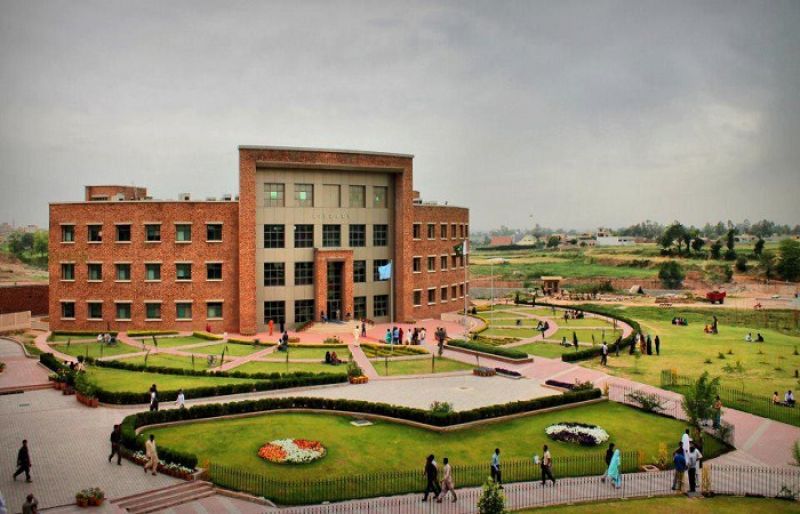
Quaid-i-Azam University Islamabad is a top public research university in Islamabad, Pakistan.
Founded as the University of Islamabad in 1967, it was initially dedicated to the study of postgraduate education but expanded through the 1980s to an interdisciplinary university offering undergraduate and postgraduate education. The university has, as of 2015, grown into the largest varsity in Islamabad with a total enrolment exceeding 13,000 students. The university is on a 1700 acres (or 6.9 km²) campus on the foothills of the Margalla.
Divided into four faculties and nine affiliated research institutes, QAU is among Pakistan’s largest and highest ranked public universities. Currently, it is ranked between 551-560 in the world and top 133 in Asia by the QS World University Rankings while its regional publications ranked QAU among 120 in Asia in 2013.The Times Higher Education World University Rankings ranked QAU between 401-500 globally and top 79 in Asia in its 2020 lists.
The university is nationally known for its research, technological advancement, and intellectual interaction with international institutes, including the United Nations, University of Tokyo and the ICTP.It is one of the most popular universities in the country and counts several public figures and intellectuals among its current and former faculty, researchers, or alumni since its establishment. They include Maleeha Lodhi, Nasim Zehra, Shamshad Akhtar, Suhail Zubairy, Farzana Aslam, Tasneem Zehra and Salma Zahid. The university is currently led by Prof. Dr. Muhammad Ali.
History
The University of Islamabad was established on July 22, 1967 under the Act of Fayaz Act. It was renamed as Quaid-i-Azam University Pakistan in honor of Quaid-e-Azam Muhammad Ali Jinnah, founder of Pakistan in 1976 – which was the year of his birth centenary. However, the spelling of the University’s name were kept different i.e. “i” was used instead of “e” for Ezāfe that links the two words in Jinnah’s title Quaid-e-Azam.
The University offered teaching and research programs for PhD and MPhil degrees in the beginning and later offered Master’s programs. The University now offers undergraduate programs as well.
Quaid-i-Azam University has four faculties and 38 departments, institutes, schools and centers.
Departments
Faculty of Natural Sciences
• Department of Chemistry
• Department of Computer Science
• Department of Earth Sciences
• Department of Electronics
• Institute of Information Technology
• Department of Mathematics
• Department of Physics
• Department of Statistics
Faculty of Social Sciences
• School of Law
• Quaid-i-Azam School of Management Sciences (QASMS)
• Department of Anthropology
• Department of Sociology
• Department of Linguistics
• Department of Defence & Strategic Studies
• School of Economics
• Department of History
• School of Politics and International Relations
• Taxila Institute of Asian Civilizations
Faculty of Biological Sciences
• National Centre for Bioinformatics
• Department of Animal Sciences
• Department of Biochemistry
• Department of Microbiology
• Department of Plant Sciences
• Department of Environmental Sciences
• QAU School of Medicine
• Department of Pharmacy
• Department of Biotechnology
Faculty of Medical Science
• Al-Shifa Eye Trust Hospital Rawalpindi
• Army Forces Post Graduate Medical Institute
• Health Services Academy, Islamabad
• Federal Medical & Dental College
• Quaid e Azam Postgraduate Medical College, PIMS
Institutes
• National Institute of Historical and Cultural Research (NIHCR) Center for Excellence
• Saulat Institute of Pharmaceutical Sciences and Drug Research
• Center of Excellence in Gender Studies
• National Institute of Psychology
• National Institute of Pakistan Studies
• Area Study Centre for Africa, North & South America
Chairs
• Quaid-i-Azam Chair
• Benazir Bhutto Chair
• Rumi Chair (in pipeline)
Rankings and Reputation
Quaid-i-Azam University Pakistan was ranked 651-700 in the world by the QS World University Rankings of 2018 and 133 in Asia.
For QS Top 10 Asian universities, QAU was ranked 6th in the natural science category in 2010.The university was overall ranked between 100-200 among the QS world top universities in 2007 and 2009.According to the latest 2019 ranking of the Higher Education Commission of Pakistan, Quaid-i-Azam University is ranked first in the general category. According to Times Higher Education Latest Rankings 2020, QAU is the only Pakistani University to be ranked among the world top 500 universities. As per rankings of OIC universities, QAU stood first in ranking among Muslim countries universities. More than 80% of the professors hold doctoral degrees and have overseas experience.
Notable alumni and Faculty
1. Abdul Rashid Ghazi
2. Aasim Sajjad Akhtar
3. Abrar ul Haq
4. Hamza Ali Abbasi
5. Ahmed Hassan Dani
6. Akbar S. Ahmed
7. Alamgir Hashmi
8. Ansar Pervaiz
9. Arshad Sharif
10. Asghar Qadir
11. Fayyazuddin
12. Ismat Beg
13. Irshad Hussain
14. Hareem Farooq
15. Ilhan Niaz
16. Khadija Mushtaq
17. Maliha Lodhi
18. Marriyum Aurangzeb
19. Mazhar Mahmood Qurashi
20. Muhammad Sharif
21. Muhammad Suhail Zubairy
22. Muhammad Zaman
23. Nasim Zehra
24. Nargis Sethi
25. Nisar Ali Khan
26. Noor Muhammad
27. Pervaiz Iqbal Cheema
28. Pervez Hoodbhoy
29. Qaiser Mushtaq
30. Qamar-uz-Zaman Chaudhry
31. Rana Mubashir
32. Zafarullah Khan
33. Rasul Baksh Rais
34. Raziuddin Siddiqui
35. Rifaat Hussain
36. Shamshad Akhtar
37. Shireen Mazari
38. Tahir Amin
39. Tasneem M. Shah
40. Zia Mian
41. M. Jaffar-ur-Rehman (computer scientist)
42. Brigadier Anis Ahmed (military officer) Sitara-i-Imtiaz.

NUST is one of the new age of Pakistani Universities with a dynamic and creative viewpoint. The University is visualized to develop as an advanced focus of greatness for innovative work in the fields of sciences and innovation. The pith basic the establishment of NUST rotates around phantom mix of designing, data innovation (IT), therapeutic and the executives sciences with higher scholarly quality and soul of greatness exemplifying its appreciated destinations. NUST is focused on the arrangement of scholarly initiative and improvement of indigenous innovation in the nation and to develop as a reference point of light for the nation’s logical and mechanical advancement and requirements.
The National University of Sciences and Technology (NUST) is an open research college under organization of Pakistan Armed Forces with its fundamental grounds in Islamabad, Pakistan. The college offers undergrad and advanced educations, including doctoral and proficient degrees. Established in 1991, it was at first framed for the need of charged officials by consolidating designing universities and schools of Pakistan Armed Forces. Afterward, it was changed over into an open research college with the fundamental grounds arrangement in Islamabad to advance science and innovation in Pakistan.
Established to give quality specialized training to fast industrialization in Pakistan, NUST received an American college model and focused on research center guidance in applied science and designing. It has since assumed a key job in the advancement of institutionalization in training of fields, for example, designing, arithmetic, and innovation in Pakistan and is generally known for its development and scholarly quality, making it one of the most lofty foundations of higher learning in Pakistan. The college is likewise home to an under-development International Association of Science Parks (IASP) confirmed National Science and Technology Park.
NUST was set up in 1991 by consolidating military and common instructive assets. After its advancement, existing military schools and universities became constituent universities of NUST. The primary school to be subsidiary with NUST was MCS in 1991. In 1993, the college was allowed a sanction and CEME and MCE turned out to be a piece of the college. In December 1994 and November 1995, CAE and PNEC became constituents of NUST individually. All the constituent schools were redesigned and MS programs were begun at CAE in September 1997. In 1998, MS programs were begun at PNEC and around the same time, Bachelor of Dental Surgery was begun at AMC. In 1999, CEME and CAE achieved ISO 9001 Certification, School of Electrical Engineering and Computer Sciences (SEECS) was propelled in Islamabad and NUST Business School (NBS, once in the past known as NIMS) was established. School of Mechanical and Manufacturing Engineering (SMME) offers degrees in Mechanical and Biomedical Engineering and is one of the most aggressive designing schools of Pakistan.
Starting at 2016, NUST has more than 15,000 full-time understudies enlisted, more than 20 divisions with more than 1,280 scholarly workforce staff. It is positioned by QS World Ranking’s as among the main 50 colleges younger than 50 and is positioned by QS as among top 400 colleges on the planet. It is likewise positioned by QS as among top 300 in world in Electrical Engineering, and top 500 in Business Studies and Mathematics. While Times Higher Education Ranking’s position’s NUST as among the best 100 colleges from BRICS and Emerging Economies, as among top 120 in Asia and among top 250 all around in the field of Electrical Engineering. In 2016, it was additionally positioned as among the following 50 driving youthful colleges comprehensively by Time’s.NUST is an individual from Association of Commonwealth Universities, United Nations Academic Impact and Tallies Network.

NUST is the principal model college built up by the Ministry of Science and Technology like KAIST of Korea. The understudy body comprises of 7,000+ understudies, including 102 global understudies and 884 postgraduate understudies. In 2015, in excess of 70,000 competitors applied for the undergrad program at NUST. NUST has 675 full-time utilized workforce staff including 17 individuals from global colleges and numerous educators and instructors are a piece of visiting personnel of NUST. Also, teachers from colleges around the globe visit NUST under synergistic game plans.
After the autonomy of Pakistan in 1947, the preparation of military corpsmen got one of the top needs of the new Government. In 1947, Military College of Signals was set up as School of Signals. After a year, in 1948, the School of Military Engineering (SME) was set up at Sialkot to prepare the corps in the field of building. In 1951, it was given the status of school – Military College of Engineering (MCE)- and was moved to its present area in Risalpur. On 1 April 1957, EME School was set up at Quetta and in 1969, it was given the status of school (CEME) and regular people were conceded. In 1962 PNEC was built up in Karachi. To prepare the individuals from the Pakistan Air Force, the College of Aeronautical Engineering (CAE) was built up at Korangi Creek, Karachi in 1965. In 1976, the College of Medical Sciences was built up as the Army Medical College (AMC) and after a year in 1977 the first MBBS course began there. Around the same time the School of Signals was moved up to a school. In 1981 a BSc program began at CEME giving it the status of a college and a couple of years after the fact in April 1984 CEME moved to its present area in Rawalpindi from Quetta. In May 1986, CAE was moved to the PAF Academy in Risalpur.Read more details visit Talibilm.pk
NUST Main Office at Islamabad Campus
In 2003, CEME got ISO 9001-2000 affirmation. Around the same time, the Center for Cyber Technology and Spectrum Management was propelled in Islamabad. In May 2004, the Center for Advanced Mathematics and Physics was made. A Ph.D program began at CEME in 2006. In 2007, the Center of Virology and Immunology was created to build inquire about in the field of restorative sciences in Pakistan. In 2008, another grounds was created in Islamabad. Some old universities are being moved to this grounds and new schools are being grown, for example, School of Civil and Environmental Engineering, School of Chemical and Materials Engineering, School of Mechanical and Manufacturing Engineering and Research Center for Modeling and Simulation. In 2012, NUST renamed NUST Center of Virology and Immunology as Atta ur Rahman School of Applied Biosciences to respect Prof. Atta ur Rehman. Most of the employees are PhD and M.Phil. educators from colleges around the globe. Countless supported understudies and employees, doing their PhD abroad, are planned to come back to NUST from 2008 onwards which will additionally build the quantity of PhD educators in the workforce.
NUST has executed the Learning Management System (LMS). It offers to its teachers and understudies a broad stage to learn and thrive. The best is carried online to make the learning procedure increasingly productive and powerful. The internet learning incorporates functionalities like courses the board, record the board, client the executives, client correspondence, web based reviewing framework, disconnected/online task accommodation and different things identified with scholastics. LMS gives an advantageous access to significant data identified with the various subjects going through the semester. Workforce can make their own courses where they can deal with their course materials and related records. A diagram obviously procedures can be seen with a snappy look and the entire semester exercises like test, assignments and tests. The framework improves consistently with the important client’s input which is the foundation of the learning framework. In 2015, Course the executives framework was presented and is in the period of improvement.
Rankings and grants
NUST was the main college in Pakistan to accomplish ISO 9000 affirmation. The constituent schools that have been affirmed for ISO Quality Management System incorporate College of Aeronautical Engineering, Military College of Engineering (Pakistan), College of Electrical and Mechanical Engineering, Pakistan Navy Engineering College and Military College of Signals.NUST won two gold and a silver decoration out of three gold and three silver decorations granted by the Pakistan Engineering Council for 2005, 2006 and, 2007 for Best Graduate of the Year Award.NUST employees won seven honors, including President’s Gold Medal, Best Researcher, Distinguished Scientist and Best University Teacher grants during 2007.
As indicated by an overview, NUST is the most prevalent decision for designing understudies in Pakistan.Google Trends show that NUST is the most looked through Pakistani college as far back as 2004 outranking a portion of the well-known worldwide colleges as Sabanci University of Turkey.
In 2013, SCImago positioned NUST as 1568 on the planet, 480 in the district and sixth in the nation for the detailing time of 2007-11. In 2014, Webometric world college rankings positioned it at 150 on the planet, third in the nation and 22nd in South Asia.
Advanced education Commission of Pakistan positioned NUST as the main college in the classification of ‘General University: Large’ in 2013 and in the classification ‘Designing and Technology’ in 2014 and 2015.
As of late, QS World University Rankings positioned NUST as 400 on the planet and in the Engineering classification, the college was positioned as 251-300. NUST positions #91 in Asian University Rankings
The foundation offers open doors for understudies to take an interest in specialized and proficient social orders. Study excursions to enterprises and associations are orchestrated, visitor speakers from establishments and industry are welcomed and classes and workshops are held. Sports offices are accessible in all grounds.
Student Bodies
Student run organizations, societies and clubs are present in almost all the NUST campuses. These include Computer Society of Pakistan – NUST Chapter, NUST Community services club, NUST Volunteer Club, NUST Science Society, NUST Deep Learning Society, NUST Adventure Club, Literary Circle, Book Club, Fine Arts Club, Innovation and Entrepreneurship Society, Media (Photography) Club, Pakistan, Innovation Society, Debating Society, Aeromodeling Club, NUST Environment Club, Telecom Society, Software Society, IT Club, Automobile Club and Sports Club. Deep Sea Diving and Sailing Club is available for the students of the Pakistan Navy Engineering College in Karachi.
Sports facilities
All the campuses have their own sports facilities. Courts for indoor games and activities such as table tennis, badminton and squash are available in almost all campuses. Tennis, basketball and volleyball courts, hockey, football and cricket grounds are also present in all the main campuses. Some colleges have swimming pools and gymnasiums.

Engineering is derived from the Latin word “ingenium” which means cleverness in the sense of genius. Engineering is the creative application of science to design or maintenance of the structure, devices, materials, system, machines, economic of operations; it has a broader range of the specialised field of engineering. It is considered to be the highest career and expected to be a growth sector in the upcoming years. It contains a large number of job opportunities and specialties. It is a highly paid salary job and salary packages different for fresh and experienced engineers.
There are many degrees in engineering disciple nowadays all have its own worth in market which are below
1. Civil Engineering
It is the broadest and oldest field of engineering and highly paid job. It deals with the designing and construction of canals, houses, buildings, river roads inside the country. The salary range of fresher is almost 50000-70000 per month
2. Computer Engineering
They are specializing in both software and hardware. To run the computer system, they develop and improve the software programs and hardware. They have many opportunities for career development within their workplace. The salary range is almost 80,000- 85,000
3. Mechanical Engineering
It deals with design and making of tools and other equipment of the machine. Its concern with the all type of machinery, all aspects f functioning: design development construction production etc. the salary range is 20,000-50,00. This plays important role in engineering Degree Demand in Pakistan .
4. Electrical Engineering
It is one of the largest and broadest disciplines of engineering in Pakistan. It deals with the electricity and related product. It also deals with the communication systems in the telecom sector. There are more job opportunities for electrical engineer in Pakistan. The salary range for fresher is almost 30,000-50,000 per month.
5. Software Engineering
Software engineering deals with the design, development and maintains of software and OS of the computer system. It generally comes under the discipline of computer science. The average salary for them is 15,000-20,000 per month.
6. Chemical Engineering
It is the branch of engineering that uses the principle of mathematics, chemistry etc. to design and converts chemicals, raw materials, energy, living cells into a useful form. The salary range is almost 30,000-150,000
7. Aerospace Engineering
It is the most challenging position and has present career opportunities across a verity of Talibilm has further different areas. So the salaries differ between airline/aviation/ defence etc. It has average salary is 67,500PKR
8. Automotive Engineering
This field of engineering is one of the most challenging exciting and rewarding careers. In this engineer research, design, and develop vehicles and their subsystem. It deals with different kind of technologies to create a productive product. The salary range is almost 30,000-35,000
9. Petroleum Engineering
It deals with designing and developing new technology and method for digging the earth surface to extract oil and gas from well all over the world. The salary range is almost 15,000-25,000
10. Biomedical Engineering
It works with a combination of biology, medicine and engineering. They are responsible for research and development of medical innovations like artificial organs. The salary range is almost 15,000-25,000
11. Drafting and Design Engineering
It involves in all stages of the design process, from presentation to finished plan. The salary range is 25,000-30,000.

The Higher Education Commission (HEC), is an independent, autonomous, and statutory institution of primary funding, overseeing, regulating, and accrediting the higher education institutions in Pakistan.
Preceded by the University Grants Commission (UGC) in 2002 by promulgation of the Higher Education Commission Ordinance 2002, the universities were formerly accredited by the UGC established in 1947; the institution was revised 1974 and came its modern form in 2002 under the leadership of Dr. Atta-ur-Rahman FRS its founding Chairman, with additional executive reforms granted by the constitution. It operates directly under the Prime Minister and is not subservient to the Ministry of Education. Under a new and revised reforms, the HEC is made responsible for formulating higher education policy and quality assurance to meet the international standards as well as providing accrediting academic degrees, development of new institutions, and uplift of existing institutions in Pakistan. The major developments in the higher education sector occurred under the leadership of Prof. Atta-ur-Rahman,FRS, the founding Chairman, during 2002-2008.The remarkable transformation in the higher education sector was acknowledged in an article in the world’s leading science journal, Nature, in which Rahman was called a “force of nature”After Prof. Atta-ur-Rahman FRS resigned in protest in 2008 due to the suspension of scholarships of thousands of students abroad by the PPP government, the university development programmes slowed down due to cut in budget and introduction of cumbersome bureaucratic procedures.
The HEC also facilitated the development of Higher education Commission of Pakistan in the country with main purpose of upgrading the universities and degree awarding colleges in the country to be focal point of the high learning of education, research, and development Over the several years, the HEC plays an important and leading role towards building a knowledge based economy in Pakistan by giving out hundreds of doctoral scholarships for education abroad every year.
he different higher education policies, priorities, and the need of competition between the political forces in Pakistan led to disturbances in the higher education as well as effecting the UGC ability The inadequate financial funding and policy implementation never matched the need of higher education in the country In 2002, President Pervez Musharraf took over the initiatives in devolving the UGC into Higher Education Commission in 2002.
President Musharraf invited eminent scientist and chemist, Dr. Atta-ur-Rahman FRS, to be its first chair and immediately passed the Presidential Ordinance on September 11, 2002 to establish the HEC Over the several years, the HEC implemented its ambitious uplift program of enhancing access, improving quality and increased relevance of higher education to the needs and requirement of Pakistan. The reforms carried out in science and higher education under the leadership of Prof. Atta-ur-Rahman when he was the Federal Minister of Science & Technology and later Chairman of Higher Education Commission with status of Federal Minister during 2000 to 2008 have been applauded by many international experts and he was called “a force of nature” in an article published in Nature As a result of the many reforms introduced by Prof. Atta-ur-Rahman in the higher education sector 4 Pakistani Universities became ranked among the top 300, 400 and 500 universities of the world under the Times Higher Education rankings of 2008. The situation in the higher education sector deteriorated in the subsequent decade with the rankings of all universities slipping badly. Dr Javaid Laghari was the second Chairman HEC from 2009 to 2013 who tried to continue the higher education reforms despite serious cuts in funding and opposition by the government. He is well known for his stand on exposing the fake degrees of many parliamentarians, including Ministers, where he took a principled stand and did not compromise on merit despite being put under intense pressure by the government. We then had Dr. Mukhtar Ahmed and Dr. Tariq Binuri as the chairs. Read complete details about this article in Talibilm.pk
A Task Force was formed on “Technology Driven Knowledge Economy” that is Chaired by the Prime Minister Mr. Imran Khan and has Prof. Atta-ur-Rahman FRS as its Vice Chairman. The group has several key Federal Ministers as Members, including Finance Minister Asad Umar, Planning Minister Makhdoom Khusro Bakhtaran, IT Minister Dr Khalid Maqbool Siddiqui, Advisor on Commerce Abdul Razzak Dawood, and Chairman Higher Education Commission (HEC) Dr Tariq Banuri. The Task Force has the mandate to promote research in technology fields and to initiate projects that can use science and technology for sustainable and equitable socio-economic development Another Task Force of Prime Minister on Science & technology has been formed with Prof. Atta-ur-Rahman FRS as its Chairman.
Governance in HEC
The HEC is governed and chaired by the appointed chairman who is assisted by the secretaries of education, science and technology, telecommunications, and information technology The Chairman and secretaries are assisted by the additional members who are appointed from the four provinces as well as university vice-chancellors. Other members are included from state and private-sector and executive director of the HEC.
The Chairman of HEC is appointed by the Prime Minister of Pakistan for a four-year term based upon the requests and recommendations send by the Ministry of Education (MoEd) According to HEC Ordinance altered in Constitution, the Prime Minister is the controlling authority of the HEC and the shortlisted names are to be forwarded to Him for the final say
The Prime Minister reserves the right to re-appoint or give extension to the designated chairman. Though the executive director is the administrative head of the HEC, almost every decision in the commission is taken with the consent of the chairman.
Finance and Budget of Higher Education Commission of Pakistan
Science is a lucrative profession in Pakistan and the official science policy in Pakistan plays a major role in the development of budget in the country for fiscal years. Since revitalized in 2002, the HEC’s budget increased up to ~340.2% in terms of fiscal period of 2001–06. Around 50%-70% of federal budget is set for the development on science and higher education, particularly distributed to HEC, highest in the financial history of Pakistan
By 2008, as a result of its policy and financial successes, most universities had become strong proponents of the Higher Education Commission. Quality had increased significantly, and several institutions were on their way to becoming world-class institutions. Many expatriate Pakistanis returned from abroad with access to competitive salaries. Besides the Pakistan government funding, a large financial endowment is distributed by the US government as part of its funding to the universities.
Prioritizing the expansion of the higher education in the country, HEC’s financial budget is estimated near ₨. 57.8 billion, which is more than that of Pakistan Steel Mills, PIA or any other state-owned enterprises’ allocations. The budget is aimed for development of various areas in higher education.
Achievements
The creation of HEC has had a positive impact on higher education and research culture in Pakistan.
• Established the finest Digital Library in Pakistan: Every student in every public sector university today has access to 45,000 textbooks research monographs from 220 international publishers as well as to 25,000 international research journals – regarded as one of the best digital libraries anywhere in the world.
• Tripled University enrolment from 135,000 in the year 2003 to 400,000 in 2008.
• Promoted research, resulting in huge expansion of international research publications from Pakistan from only 600 research papers /yr. in 2003 to 4300 research papers in 2008.
• During the 56-year period (1947–2003) not a single Pakistani university could be ranked among the top 600 universities in the world. Today 2 Pakistani universities ranked among top 200 World’s Technology Universities
• Four-year undergraduate program introduced so that our degrees are internationally recognized, along with a 3 credit hour research based activity and enforcing a minimum attendance <50%
• About 5000 Ph.D. level scholarships awarded for study in technologically advanced countries (largest program in developing world) and some 3,000 indigenous Ph.D. scholarships have been awarded. The world’s largest Fulbright Scholarship program (US $150 million) launched with joint funding (HEC/USAID).
• Fifty-one new universities and degree awarding institutes and 18 campuses of existing universities established during (2003–2008).
• Sending 1000 Pakistani students to study medicine in Cuba and doing their best to register their degrees by PMDC and soon will send a delegation of members of PMDC, HEC and MNAs
• Seven Pakistan universities became ranked for the first time among the top 250 universities of Asia according to QS World University Rankings 2013.
• Research output of Pakistan increased by over 50% within two years, which was the second highest increase worldwide. According to Scimago world scientific database, if Pakistan continues at the same pace, its ranking will increase from 43 to 27 globally by 2017. In 2017, a Chinese study published in Scientometrics (journal) revealed that Pakistan’s research growth rate and time required to double the number of publications is superior than that of USA, China and India.

Distance learning is a mode of education in which, student gets their formal education while remain at home. Distance learning has been taking place from quite some time now. Students or individual who want to have their educational background increase without disturbing their normal routine opted for this type of education. Drop out students, office workers, old age people, laborers and other group of people who want to get educated gets benefitted from this type of learning.
Distance learning is the kind of education that doesn’t require any time or location while the students remain isolated in their comfort zone. Teachers with the aid of technology deliver material of course to the student and give assignments as well. Students while remain at their home, completed their assignment and sends back to the teacher with the same source or written assignments can sent via couriers.
Distance learning is one of the fastest growing domestic and international educations. Students remain separated by the teacher. They remain home and free to work any time of the day. Technology is being used by both teachers and students which provide extra comforts to both. The learning hours are also flexible so that students can learn more and more. Any single individual of the society can be taught with this kind of education.
Universities who offer distance education or distance learning are called as “Open Universities”. These open universities are offering vide range of courses so that every single individual gets benefit from this education.
In Pakistan distance learning is also very common and is being offered by number of different institutes and universities. Few of them are:
• Allama Iqbal Open University (AIOU)
• Pakistan Montessori Council (PMC)
• Professional Institute of Pakistan (PIP)
• Pakistan Institute of Modern Studies (PIMS)
• Virtual University (VU)
• Bahauddin Zakariya University (BZU)
• Islamia University of Bahawalpur (IUB)
• National Institute of Modern Language and Sciences (NIMLS)
Among all Allama Iqbal Open University was the pioneer in distance learning or Distance Education not only Pakistan but in Asia and the rest of the world. Founded in May 1974, make it the first Open University of Asia or Africa and 2nd in the world. First Open University was developed in UK in 1960s. After the success of the state owned Open University, numbers of open universities were established to provide education to the masses especially women at their doorstep.
The most recent opened Open University in Pakistan is Virtual University which is also owned by the government of Pakistan. University was founded in 2002 and since its existence the university is giving quality education to the masses of Pakistan. University is offering its courses in more than 60 cities of Pakistan and is associated with number of institutions to provide quality education.
The plus point of all these distance educational institutes or Open Universities in Pakistan that not only they are offering vide variety of courses but the fee structure of these institutes and universities are kept within the reach of every single individual of the country.
Conclusion:
• Distance learning is a quality education which can be compare with any other formal educational institute or university in the country.
• They offer a number of courses that are the need of the hour to meet the needs of student in their working fields.
• These universities are giving this quality education at a very reasonable price so that every individual in the society can avail this opportunity.
The world is a click away” is the phrase that aptly defines the concept of a globalised world, in which countries and people are interconnected by communication technologies. The communication technologies — radio, television, print media, Internet, cellular phones — provide access to the flow of information around the world. The world is rapidly changing, and to keep up with that it is important to remain updated, which can only be possible by educating oneself. Education means to gain knowledge by enlightening oneself with surroundings as well as with the world.
Distance education is not only for students but also for everyone who wants to pursue education, whether they are working, are homemakers, or are somewhere out of the country. It is in hands of a student to determine the place and time of his/her study. Moreover, it is a learner-to-learner communication that also anticipates two-way communication by open learning as well as correspondence study, saving money and time.
Distance education has developed more intensively in South Asia than in other regions. In South Asia, generally with the exception of Sri Lanka, the literacy rate is relatively low. Many citizens, particularly women and those in rural communities, are unable to study owing to the socioeconomic problems of the region. Various countries have realised the value of distance education, and policies are continually under development for using distance education as a means of enhancing educational access.
Distance learning is found both in advanced as well as in developing countries, but the advantage for a developed country is that its advancement supports the widespread influx of technology associated with the distance education, while the developing countries lag behind due to a huge rate of illiteracy and no sign of improvement.
According to the goal two of the United Nations Millennium Development Goals, primary education is important for all children, and it should be widely implemented. However, developing countries have less access to printing knowledge as well as technology to improve their standard of education. The inequality in the access of education in addition to the cost and the quality of education has become a barrier for developing countries.
The new distance education theory deals with the concept of distance. The theorists elucidated the difference among distance education and conventional ones: the former one does not entail attending educational institutions, whereas in the latter it is required to attend universities
or colleges.
Education is considered a major priority in South Asia, and a means to socioeconomic advancement by all citizens — urban and rural, rich and poor. This attitude has created a demand for education with which traditional systems have been unable to cope, and the introduction of distance education has been intended as a solution. There are various types of distance education in which correspondence courses lessons are mailed to students, and assignments are mailed back to teachers. The need for education in health, agriculture and environment has increased the demand for distance education. Efforts to increase acceptance and use of distance education in South Asia so as to solve the educational and literacy problems are being made by various colleges and universities.
With the advent of new technologies, the delivery of distance education is rapidly changing. The introduction of information and communication technology (ICT) in developing countries has benefitted students and teachers to acquire education while living geographically as well as physically away from the place. ICT, defined in a broad sense, includes mediums of radio, TV, telephone, computers, the Internet, and methods including web-based education and interactive collaborative learning. Many countries have introduced ICT-based distance education programmes combined with traditional methods, such as correspondence courses and face-to-face teaching through the Internet.
The distance-learning programme with the use of different communication technologies have made it possible for the South Asian countries like Pakistan to be equipped with new and enhanced education system.
The introduction of ICT is a key element in the growth of Pakistan in terms of new jobs, wealth redistribution and education. Distance education has been a great initiative for Pakistan, as its socioeconomic situation has prevented a high enrollment in formal education by people in rural areas rural, females and some professionals; the idea of establishing distance education and open university systems have been developed to address this problem. As a result, there are many steps that have been taken by government of Pakistan for education, and one of those is to initiate virtual classes in schools, colleges and universities. The world’s second open university was established in Pakistan by a federal charter in 1974. The Allama Iqbal Open University (AIOU) is one of the largest universities in Pakistan that use distance education programmes to facilitate those students who work outside Pakistan or are home-makers. The AIOU has conducted pioneering work in the fields of mass education, female literacy, teacher education and media-based distance education, and is currently harnessing ICTs in order to reach out to 65 percent of Pakistan’s students who live in remote and rural areas. The classrooms in the AIOU use audio and video facility as well as satellite Internet for interaction with learners from all across the world. Electronic libraries have also been introduced that are linked to books, journals and articles worldwide.
In 2000, government of Pakistan developed a new initiative to enhance the country’s online education capacity, as a result of which the Virtual University of Pakistan (VUP) was established in 2002. The VUP uses the national telecom infrastructure, and delivers its lectures through satellite broadcast TV channels with interaction provided over the Internet. Moreover, the Aga Khan Education Services also use computers for distance education, especially in rural areas.
These services also improve the method of teaching by collaborating with international educational institutes.
Furthermore, there are two research programmes such as PERN and IEARN that have linked the research and education of Pakistan with the world. They use digital libraries to participate in online-based curriculum projects, which enhance the potential of students to share knowledge and research globally. Radio programmes are also developed in collaboration with UNICEF to raise issues that create awareness in society regarding gender discrimination, corporal punishment and other issues.
Technology has been an effective tool for distance education in Pakistan, but there are certain limitations that need to be addressed along with its use and importance. The literacy rate of Pakistan is very low, and is one of the biggest constraints for distance education as it affects the comprehension level as well as quality of instruction. Firstly, teachers are not well-versed with technology skills, and they are not even well-trained. Secondly, the Internet is expensive, and most of the rural students cannot avail this opportunity. And lastly, there is the issue of misuse of technology as many technicians are not well-trained. All these issues can be a hindrance in distance education programmes. For more details visit Talibilm.
Being cost-efficient, Distance learning has become a potential source for rural population to empower themselves and interact with the world. Moreover, it is important to overcome hurdles by making education essential for everyone, and support different programmes that promote distance learning.
This is an example post, originally published as part of Blogging University. Enroll in one of our ten programs, and start your blog right.
You’re going to publish a post today. Don’t worry about how your blog looks. Don’t worry if you haven’t given it a name yet, or you’re feeling overwhelmed. Just click the “New Post” button, and tell us why you’re here.
Why do this?
The post can be short or long, a personal intro to your life or a bloggy mission statement, a manifesto for the future or a simple outline of your the types of things you hope to publish.
To help you get started, here are a few questions:
You’re not locked into any of this; one of the wonderful things about blogs is how they constantly evolve as we learn, grow, and interact with one another — but it’s good to know where and why you started, and articulating your goals may just give you a few other post ideas.
Can’t think how to get started? Just write the first thing that pops into your head. Anne Lamott, author of a book on writing we love, says that you need to give yourself permission to write a “crappy first draft”. Anne makes a great point — just start writing, and worry about editing it later.
When you’re ready to publish, give your post three to five tags that describe your blog’s focus — writing, photography, fiction, parenting, food, cars, movies, sports, whatever. These tags will help others who care about your topics find you in the Reader. Make sure one of the tags is “zerotohero,” so other new bloggers can find you, too.

 Site Title